Wonder What Weed: Pokeweed
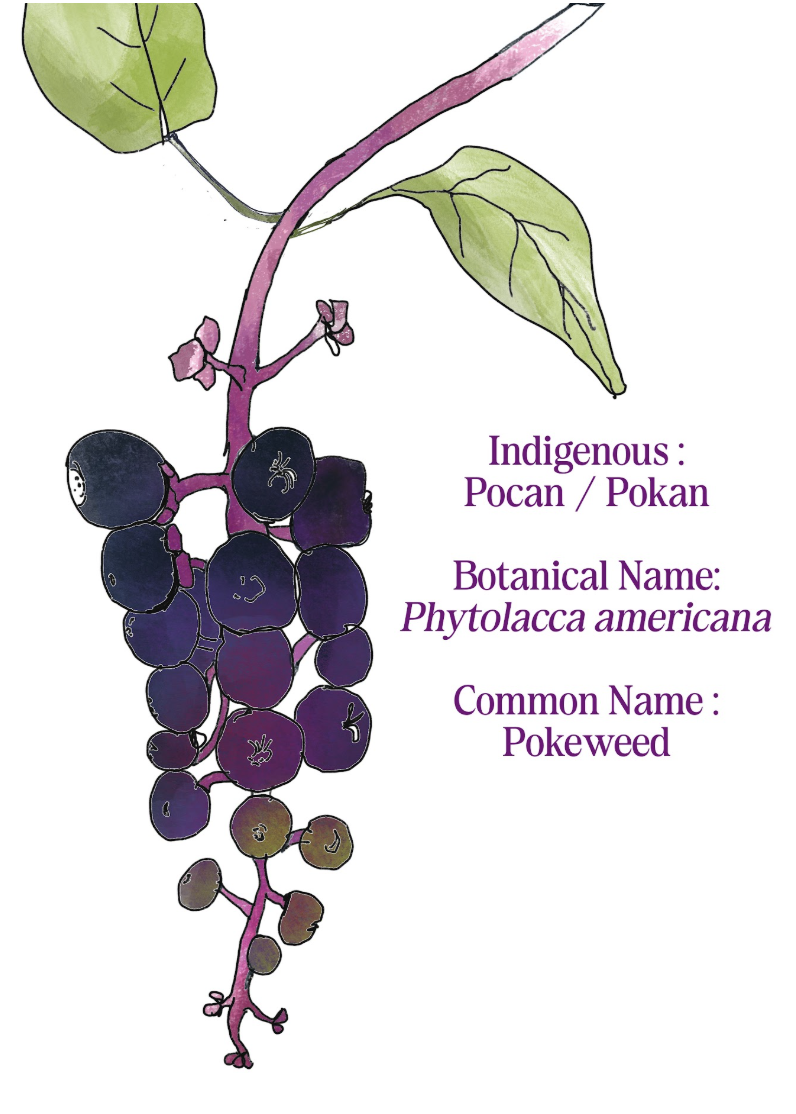
by Lisa Perez
You can’t mistake this plant with its vibrant fuschia stems, and drooping dark berries in late summer to autumn. Often demonized, this valuable native plant grows voraciously when left to thrive. If we can leave it where it won’t impose too greatly, its berries (toxic to humans) will feed mammals from fox to chipmunk and fuel songbirds on their fall migration. Hummingbirds and native bees love its flowers, and it is a host plant for North America’s giant leopard moth. (1)
Sometimes it just takes a softening of our impulse to control our gardens, embrace a few so-called weeds, and learn to welcome them into our plant communities.
(1) Lawson, Nancy, The Humane Gardener, Chapter 2, pp.49-65