Weeds in the Garden: Purslane
by Jim Salomon
There are many aesthetic judgements in gardening. It’s fun to see the variety of garden designs in the FPCG, especially now that the growing season is underway. As plants start to pop up in your plot, you might also be judging which sprouts are weeds and which are the intended plants. Between noxious weeds and lovely vegetables, there is an additional category of unintended bounty. Depending on your gardening aesthetic, you might want to consider eating the delicious and nutritious interlopers that you can identify. Currently, in our plot we have a bumper crop of purslane. I had been pulling the sprouts, but we were away for some days and they simply flourished. This is a perfect example of a desirable and delicious weed. It’s got a lemony/salty taste, is very nutritious and a fine substitute for spinach.
Considering any uninvited guests for a salad begins with knowing for sure what you’re picking. Taking a picture with your iPhone and letting Siri identify a plant is a good starting point, but often not definitive enough for foraging. It’s best to ask someone who knows or to use a reliable plant reference. The Wikipedia entry for purslane is pretty good, see the link below. Here’s their description: “purslane grows from a taproot with fibrous secondary roots. The plant may reach ...16 inches... in height. It has smooth, reddish, mostly prostrate stems, and the leaves, which may be alternate or opposite, are clustered at stem joints and ends.
Here is purslane growing in our plot:
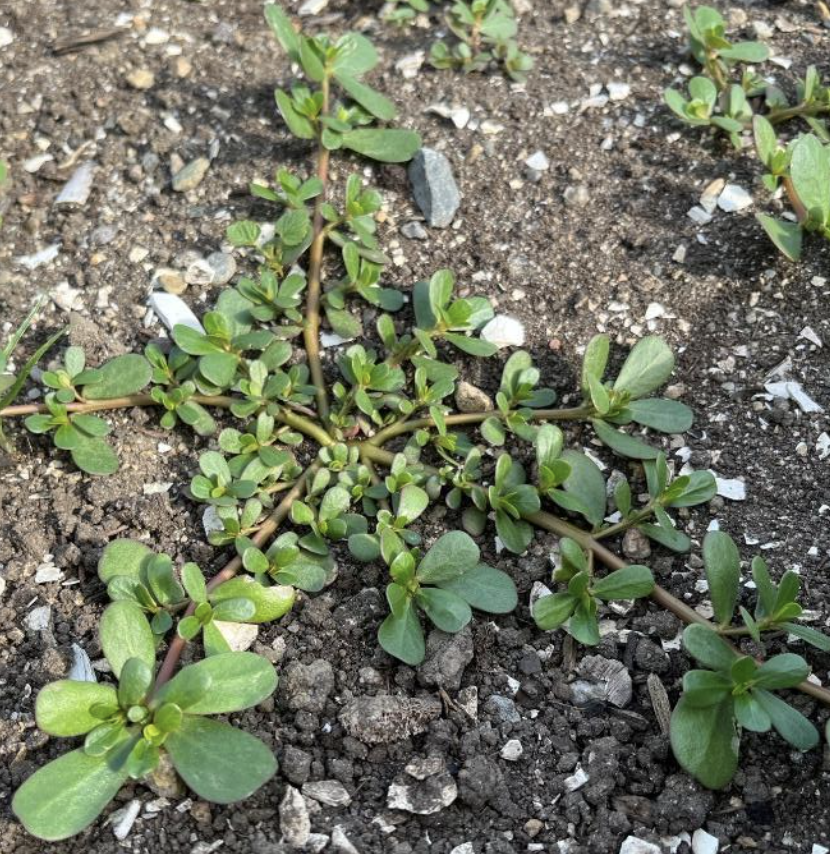
Purslane is a succulent; the stems and leaves are fleshy and soft. It can keep in the fridge for a couple of days but is best eaten fresh from the garden.
To assess your plant identifying skills, there is something that is also growing in our plot and is not purslane. This is Spotted Spurge and is considered toxic [not healthy to eat!!] and its distinctive white sap can cause skin irritation:
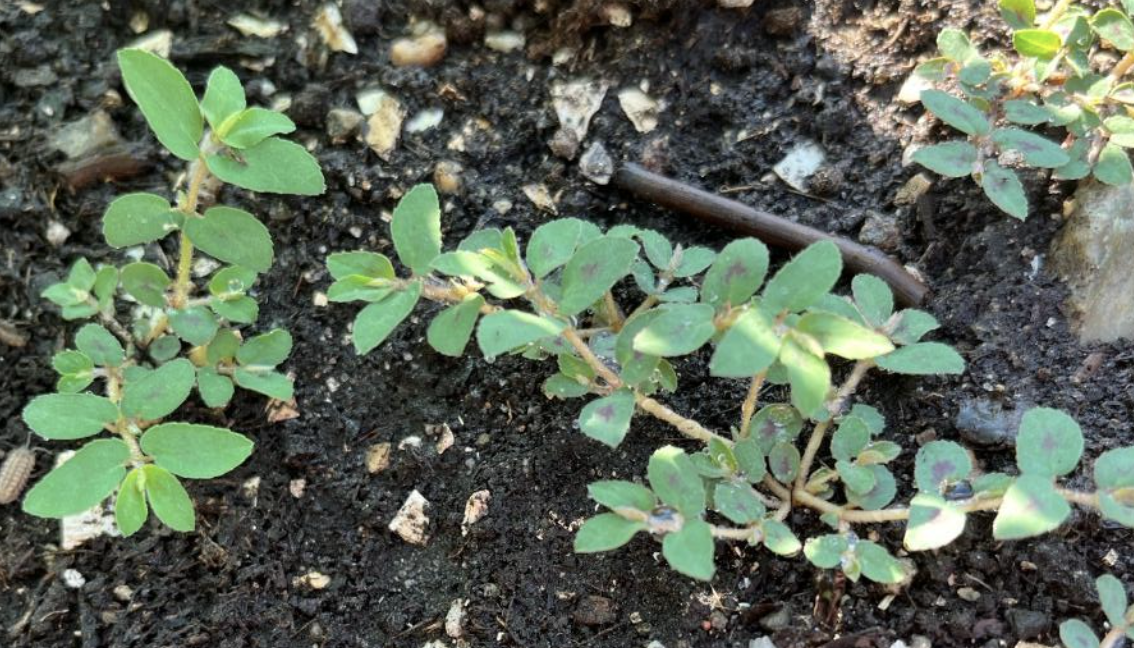
These are very different plants, but they’re growing right next to each other in our plot, so as with any foraging, attention is required. If you have any uncertainty about plant identification, check with someone else. Do not eat anything that you can’t identify with certainty.
Most people are reluctant to forage wild foods growing in the sidewalks and lawns around the neighborhood, and there are many good reasons to avoid this practice. However, foraging weeds in the garden is a special case. By luck, it’s growing in a clean, chemical-free environment that is intended for growing food. The only difference between your intentional vegetables and the purslane is that nature has provided the seeds without consulting you. I might think twice about foraging plants growing along the fence or outside the fence, especially at the edges of parking lots that border the garden, but a garden plot is a perfect source for edible plants of all origins.
Once you’re sure, it’s time to pick some purslane, trim off the roots if you want, and start preparing. The simplest option is to chop up the leaves and stems a bit and add it to a salad. The young plants are delicious and tender, comparable to spinach.
More about Purslane:
Purslane is eaten globally; other names include pigweed (a personal favorite), pursley and verdolaga. It is a delicious succulent, eaten both raw and cooked in soups or stews. Just adding coarsely chopped stems with leaves to a salad is simple and nutritious. In the FPCG cookbook, there’s a recipe I’ll be making for a purslane Frittata, from Nicola De Pace [see p. 13] which sounds delicious. For Indian cuisine, there are many recipes online for keerai [greens] cooked with lentils and I plan to try some soon using purslane. See the link for a Spinach Chilla recipe below, it sounds great.
There are many articles on the nutritional benefits of purslane, even calling it a “superfood”. According to Web MD ‘in Chinese folklore, purslane is known as a "vegetable for long life" ‘. The FDA lists it in their database of vegetables, showing high levels of vitamin C and E, minerals and other nutrients. “purslane is a nutritious food rich in omega-3 fatty acids and antioxidants.”
The only downside to consuming purslane is that, similar to spinach, purslane contains oxylates which are associated with kidney stones. Check the WebMD article below for details.
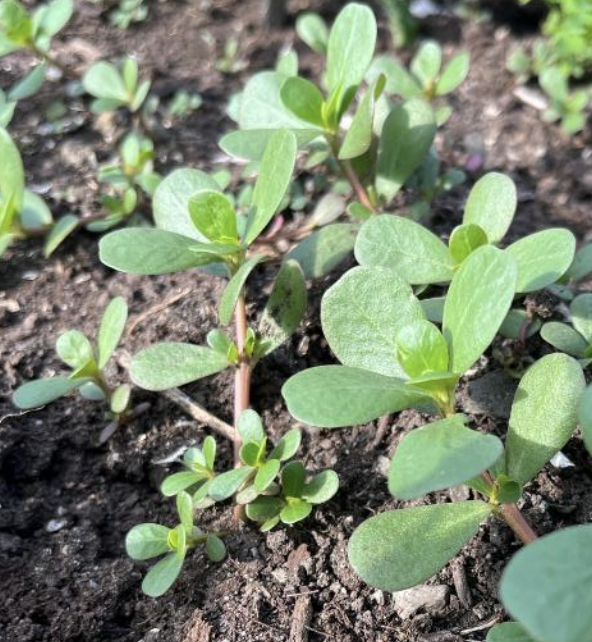
So, if your garden plot is well mulched, and entirely weed-free, good for you! Your plants are growing free from competition. For those who weed periodically, this is an invitation to snack on the sprouts you can clearly identify. We’ll be eating some purslane salad (and Frittatas) at our house for at least a few more weeks, while also keeping the weeds from interfering with our favorite “intentionals”.
———
References:
Wikipedia’s entry for purslane is here: Portulaca oleracea - Wikipedia
Here’s an article from the Farmer’s Almanac: purslane: Health Benefits, How to Cook It, and Why It’s Not Just a Weed | The Old Farmer's Almanac.
WebMD: purslane: Health Benefits, Nutrients, Recipes etc
purslane, raw - Nutrients - SR Legacy | USDA FoodData Central
Spinach Chilla with Oats and Masoor Dal - Ministry of Curry